Dubai Motor City is a well-known residential area in Dubai that was designed to feel more like a quiet suburban town than a busy city centre. It was developed by Union Properties with a very unique idea for Dubai: to combine everyday living with a motorsport theme, including the famous Dubai Autodrome race track located inside the community. Unlike central areas such as Downtown Dubai or Business Bay, where you mainly see tall skyscrapers and busy streets, Motor City is made up of low-rise apartment buildings, villas, wide roads, green spaces and neighbourhood shops. This makes it feel more relaxed and spacious, which is why many families and long-term residents choose to live here. Over time, it has grown into a complete community where people can live, work, shop and spend their free time without needing to travel far. The area is mainly divided into three parts. The first is Uptown Motor City, which is the main apartment area with cafés, supermarkets and everyday services. The second is Green Community Motor City, which is a quieter villa neighbourhood with larger homes and more greenery, popular with families. The third is the Dubai Autodrome and surrounding commercial zone, which brings motorsport events, entertainment and business activity into the area. Together, these three parts create a balanced community that offers a mix of housing types, a family-friendly environment, and a unique lifestyle connected to motorsport and leisure.

Motor City has traditionally been known for its spacious apartments and relatively low-density architecture. Uptown Motor City forms one of the community’s established residential cores, with mid-rise apartment buildings surrounded by landscaped streets, parks and neighbourhood retail, while Green Community Motor City provides larger villas and townhouses within a quieter, greener setting. Together, these areas reflect the community’s established character, offering a balanced mix of apartment living and family-oriented villa lifestyles. The area is now entering another development cycle, bringing significantly newer residential stock into an already mature and well-connected neighbourhood.
Velose Residences represents this new wave of development, introducing contemporary residences designed to meet the expectations of modern buyers and tenants seeking upgraded living standards within Motor City. By complementing the existing stock rather than replacing it, the development strengthens the area’s overall residential offering. This combination of established ready properties and newer residential options gives investors exposure to both consistent rental demand and the potential for long-term capital appreciation as the community continues to evolve.

Motor City sits within the wider Dubailand corridor, with convenient access to Sheikh Mohammed Bin Zayed Road, connecting residents to major employment and lifestyle destinations across Dubai. Its location also places it close to communities such as Dubai Sports City, Arabian Ranches, Dubai Studio City and DAMAC Hills. Another important connection is Hessa Street, which links the wider area toward Al Khail Road and Sheikh Zayed Road. Dubai’s Roads and Transport Authority has been significantly upgrading the Hessa Street corridor, including expanding road capacity and improving major intersections. Phase Two extends between Al Khail Road and Sheikh Mohammed Bin Zayed Road and is designed to double corridor capacity from 4,000 to 8,000 vehicles per hour. Unlike Business Bay or Dubai Marina, however, Motor City does not currently have a Metro station within the community, making private vehicles, taxis and buses more important for daily transportation. This is one of the key considerations when comparing Motor City with more centrally located communities.

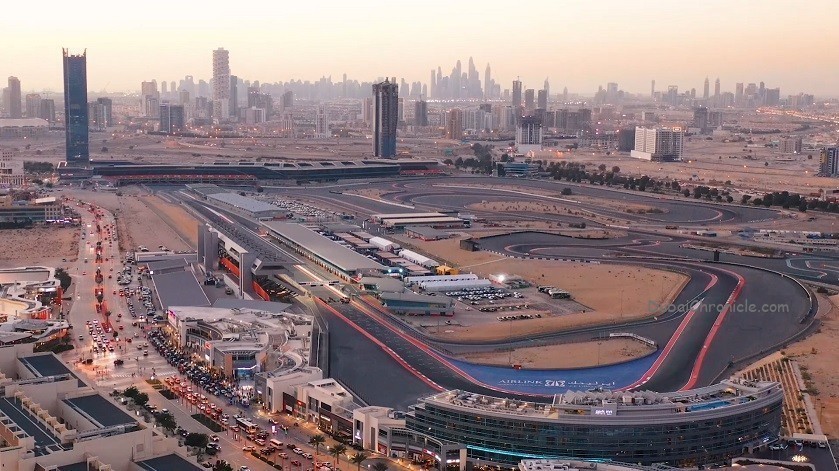
The defining landmark of Motor City is undoubtedly Dubai Autodrome. Rather than adding a theme to an existing residential neighbourhood, the original master plan was fundamentally built around motorsport and automotive culture. The Autodrome gives the community an identity that no other major residential district in Dubai quite replicates. Motorsport events, track experiences, karting and automotive activities create regular movement into the area, while the circuit itself acts as a major landmark around which residential and commercial development has continued to expand. At the same time, Motor City does not feel like a racetrack surrounded by apartments. Much of the residential community is deliberately landscaped and relatively quiet, creating a contrast between the energy of the Autodrome and the suburban character of the surrounding neighbourhoods.
One of Motor City’s strongest advantages is that it already functions as an established residential community. Residents have access to supermarkets, cafés, restaurants, schools and nurseries, healthcare, fitness facilities, parks and everyday retail without having to depend entirely on neighbouring districts. Its architecture also contributes to the lifestyle. Compared with Dubai’s newer high-density apartment communities, many of Motor City’s established buildings offer larger layouts, lower building heights and more generous community spaces. Green areas, pedestrian-friendly internal streets and family amenities have therefore made Motor City particularly attractive to long-term residents who prioritise space and practicality over beachfront or Downtown-style luxury. The result is a community with a more relaxed suburban character while still maintaining convenient access to the wider city.
Motor City has developed a strong neighbourhood retail environment, particularly around its established residential areas. Restaurants, cafés, supermarkets, fitness centres and everyday services are distributed throughout the community rather than concentrated entirely inside one major destination mall. For larger entertainment and retail options, residents are also positioned close to Dubai Sports City, Arabian Ranches and neighbouring Dubailand communities. Combined with Dubai Autodrome and Dubai Kartdrome, this gives Motor City a lifestyle proposition based more around community living, sport and everyday convenience than tourism and nightlife.
From an investment perspective, Motor City has traditionally been a long-term rental market rather than a tourism-driven short-term rental destination. Its tenant base includes professionals, couples and families who value larger properties, established amenities and convenient access to employment centres around Dubai Studio City, Dubai Production City and the wider Dubailand corridor. The addition of newer developments is now broadening that investment proposition. Investors can choose between established apartments with existing rental demand, larger family properties and newer off-plan stock from developers such as Union Properties and Sobha Realty. Current 2026 market estimates vary depending on methodology, but one recent analysis based on live Dubai Land Department rental and sales data places Motor City’s average gross rental yield at approximately 6.6%. Actual performance varies substantially by project, property size, purchase price, service charges and vacancy. This combination of an established tenant base and a new development cycle is important. Unlike completely emerging communities where investors may have to wait for schools, retail and infrastructure to arrive, new projects in Motor City are being introduced into an area where much of the underlying community infrastructure and residential demand already exists.
Motor City offers something increasingly difficult to find in Dubai: an established, low-density community with larger homes and mature infrastructure that is simultaneously entering a new phase of development. Its appeal is not based on beachfront living or proximity to Burj Khalifa. Instead, it comes from spacious residential stock, family-oriented surroundings, the unique presence of Dubai Autodrome, strong road connectivity and an existing rental market. With developments such as Sobha Orbis, Takaya and Mirdad introducing newer inventory, Motor City is evolving without losing the community character that originally made it popular with long-term residents. For investors, that creates a balanced proposition: an established community with existing rental demand, combined with new supply and infrastructure improvements that can support the area’s next stage of growth.